The most common concern I hear from parents inquiring about SAT tutoring goes something like this: “I don’t understand — my child goes to a great school and excels in her classes. She’s got a 4.0 GPA, but her SAT Reading & Writing score doesn’t even place her in the top ten percent. How is this possible?”
The expectation behind the question is reasonable. The SAT is designed as a measure of academic ability. If a student excels in a rigorous program, it seems natural to expect that performance to carry over to the test.
It often doesn’t, and that gap typically has less to do with the student’s ability than with a misalignment between what SAT Reading tests and what most schools teach.
SAT Reading & Writing tests narrow subsets of knowledge — and a specific kind of reading.
The SAT is broadly taken to be a measure of general academic ability, and my purpose here isn’t to question that characterization. But to whatever extent the SAT does measure ability, it does so through sampling: testing narrow, carefully selected knowledge and skills that are meant to stand in for the whole. What that means in practice depends on which part of the test you’re facing.
Grammar: a sampled body of knowledge.
The Standard English Conventions portion of the test — the grammar questions — is the more tractable case. Not all grammar rules are tested, only a small subset, and those tested rules themselves have specific parameters that aren’t universally treated across curricula. Many bright, high-achieving students come to me having been taught that commas go where there are “natural pauses” in a sentence. For everyday writing, this is fine. But students who bring that approach to the SAT are consistently disappointed with the results — the test rewards rule-based punctuation, not intuitive rhythm.
And even when a school does teach the tested rule in the way it gets tested, timing matters: a student who learned modifier errors a year or two ago will not have that material fresh enough to apply reliably under test conditions.
These are real gaps, but they’re manageable: knowledge that isn’t there can be taught, and rules that have drifted can be refreshed.
Reading: a different mode entirely.
The Reading portion is a different kind of problem, and a deeper one. Here the gap isn’t that schools teach a subset of what the test measures. It’s that schools and the test are teaching and testing two different modes of reading.
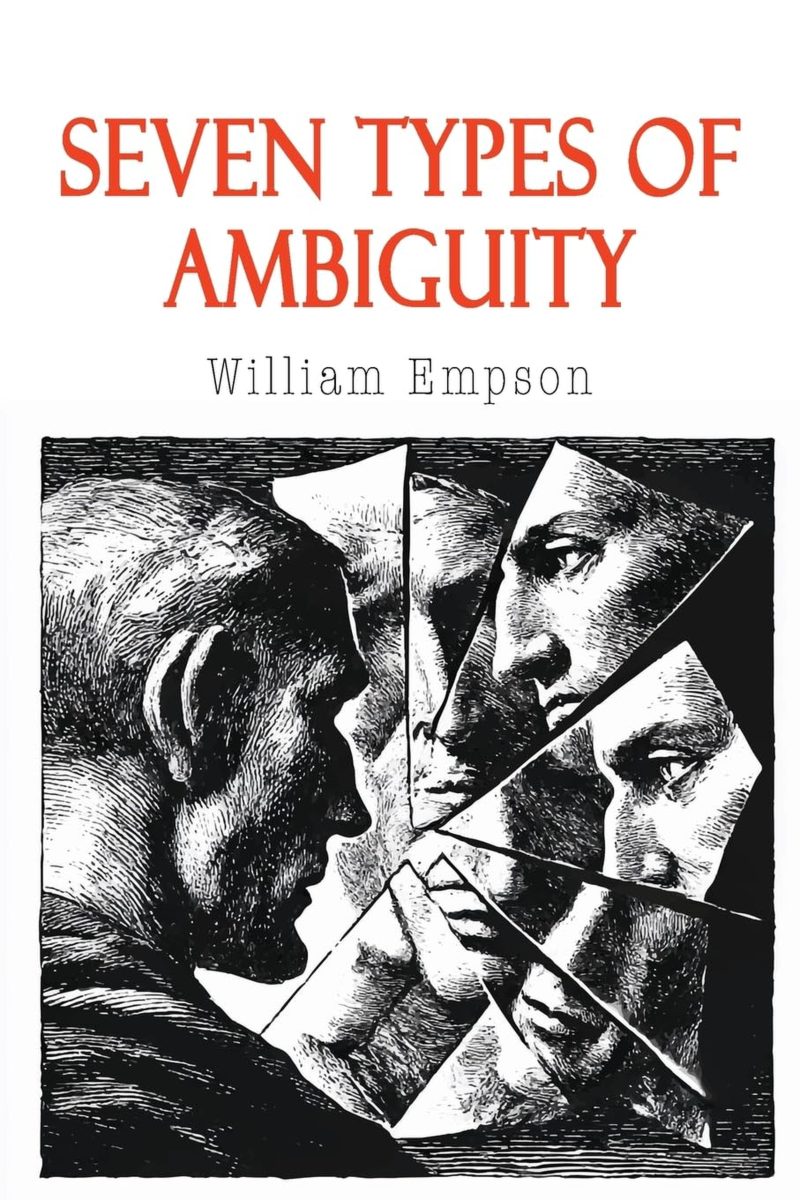
In English and literature classrooms, students are trained in what might be called the literary mode — attentiveness to connotation, subtext, ambiguity, and the “productive multiplicity of meaning.” When a teacher asks what a passage means, they don’t want the text parroted back; they want to know what the student made of it. Multiple readings can coexist. This is the tradition of close reading, and it is at the heart of what constitutes a good 21st-century English education.
The SAT tests a different mode. Call it forensic reading — the discipline of determining strictly what a text commits to, refusing plausible-but-unlicensed inferences, treating the passage as evidence to be checked rather than the raw material of interpretation. In this mode, an answer is correct not because it captures what the passage might suggest or evoke, but because it accurately represents what the passage actually says. The reader’s job is fidelity, not depth.
Both modes are real reading. Both are valuable. But they are distinct skills, and mastering one does not automatically confer proficiency in the other. Far from it. A student steeped in literary reading — the very student a rigorous school produces — is trained to probe a text’s ambiguities, to enrich it with association and implication. On the SAT, that enrichment is exactly what produces wrong answers. The test’s most tempting incorrect choices are often the ones that fit a rich, associatively elaborated reading of the passage without strictly matching the specific words on the page.
Why does SAT Reading work this way?
A reasonable question arises here: if schools don’t teach the forensic mode, why would the College Board test it? The answer has nothing to do with the College Board’s own preferences. The issue is structural.
I won’t pretend to expertise in psychometrics, but the basic constraint is straightforward. A nationally administered exam needs answers that are provably correct and provably incorrect — defensible against appeals, consistent across millions of test-takers, and scoreable without human judgment. The literary mode can’t meet those constraints, because its value lies precisely in supporting multiple defensible readings. A test question with several defensible answers may serve as an excellent discussion prompt but makes for a very poor standardized multiple-choice item. The forensic mode is what’s left when you subtract every mode of reading whose answers depend on interpretation: what does the text commit to, checkable by anyone against the words on the page.
So the test isn’t testing what the College Board considers the “best” kind of reading. It’s testing the only kind a standardized instrument can measure. That’s not a defense of standardized testing, but neither is it an indictment — it’s simply a description of the constraint any such test operates under. It’s also helpful test preparation insight. Once you see the constraint, the SAT Reading’s answer choices stop looking arbitrary.
But forensic reading isn’t merely a test-prep artifact: it’s the mode that any determinate reading task requires, from contracts to statutes to technical documentation. The SAT happens to test it because it has no alternative. That doesn’t make it a lesser skill, unworthy of serious study. There are lots of good reasons to master forensic reading; increasing your SAT score is just one of them.
What this looks like in practice.
Consider how often SAT Reading & Writing questions include the word logically, as in: Which choice most logically completes the text? That word is the test’s signal that the forensic mode is required — the answer must follow from what the text commits to, not from what it merely allows room for or what resonates intuitively.
But most students mentally translate the question loosely as “Which answer could be true?” — or, even more catastrophically, “Which answer feels like the best interpretation?” Such translations are the literary mode operating by default. The student is asking which choice the text leaves room for, or which fits her impressions of it. The test is asking a narrower question: which single choice the text demonstrably licenses. The specific standard the test is imposing doesn’t register, because the student has rarely, if ever, been asked to read this way.
And even for students who do notice that logically keeps appearing, the question of how to respond to it remains. How, exactly, is one supposed to analyze the passage, scrutinize the answer choices, and identify the only one the College Board will accept as logically valid — all in approximately a single minute?
Rigorous high school coursework doesn’t prepare students for this, and it’s not a criticism of the coursework. Schools teach the literary mode because literary reading is the point of literary education. The SAT tests the forensic mode because forensic reading is what standardized measurement of comprehension requires. Neither party is doing anything wrong, but they are optimizing for different things, and the student unaware of this disparity will see it reflected in their score report.
Academic excellence is necessary. It is not sufficient.
Strong academic preparation matters — it is the foundation that serious SAT preparation builds on. A student who reads deeply and thinks carefully has substantial advantages over one who doesn’t. But it is a mistake to assume that foundation is enough.
Schools optimize for depth of engagement with texts. The SAT measures fidelity to them. Depth and fidelity are related but distinct skills. Bridging them — teaching a student trained in the literary mode to read forensically as well — is the central task of SAT Reading preparation.